Easy Flight · Maintenance Course
Understand Your Powered Parachute from the Inside Out
Build practical maintenance and inspection skills in a focused, 14-day program. Learn about the equipment you own—or plan to own—with opportunities to ask questions, participate, and learn alongside others who share your interest in powered parachutes.
14 days · Maximum 8 students · $4,950
FAA-accepted course LSRMPP 032601
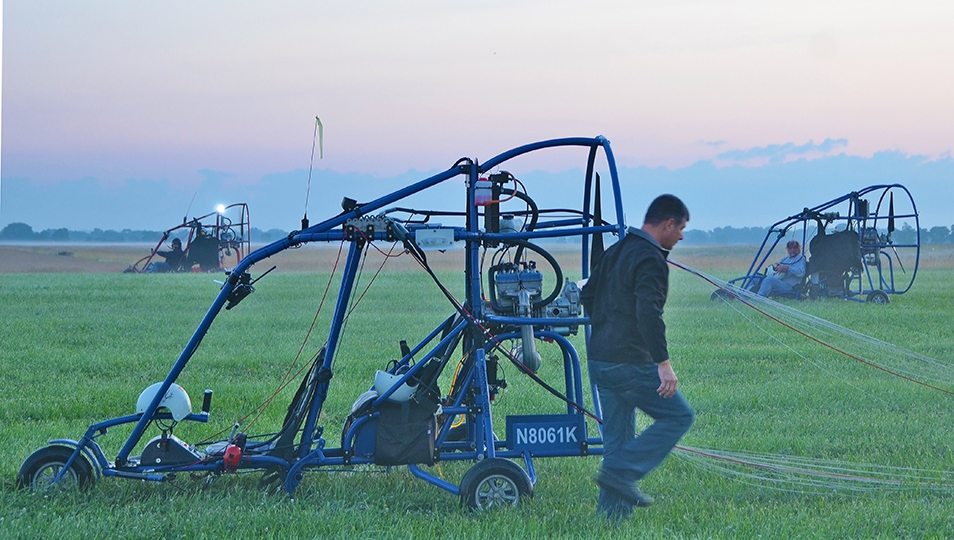
A Direct Path to Powered Parachute Maintenance
To our knowledge, Easy Flight currently offers the only stand-alone FAA-accepted Light-Sport Repairman Maintenance course for powered parachutes in the United States.
“Stand-alone” means the maintenance fundamentals and powered parachute instruction are taught together in one complete, 14-day program. You can plan your training around a single course, with a clear schedule and one tuition covering the full program.
After successfully completing the course and written examination, you’ll receive the course completion certificate needed to apply to the FAA for your repairman certificate with a maintenance rating and powered parachute privileges.
The Inspection and Maintenance courses are separate programs. You can enroll directly in Maintenance. Its inspection training and broader rating mean you do not need to take the two-day Inspection course as well.
Practical Value for Ownership and Business
- Take a more active role in aircraft care. Build the skills to carry out qualifying maintenance and required inspections after FAA certification.
- Gain more control over costs and scheduling. Handling work within your qualifications can reduce your reliance on outside services and help you plan around your flying.
- Keep records that show the aircraft’s history. Clear maintenance and inspection entries support continuing care, buyer confidence, and marketability.
- Prepare for a better-informed purchase. Learn to evaluate records, examine equipment, and recognize findings that call for further investigation.
- Offer another service to aircraft owners. Instructors and repairmen can use the appropriate certificate privileges to provide maintenance and inspection services to customers.
Who Is This Course For?
Powered Parachute Owners
Understand your aircraft more thoroughly and develop the knowledge and skills to take a more active role in its maintenance.
For owners of Special Light-Sport Aircraft (SLSA) powered parachutes, earning the maintenance rating with powered parachute privileges provides a path to performing qualifying maintenance and the required annual condition inspections yourself. These aircraft must receive a condition inspection once every 12 calendar months. FAA SLSA inspection requirements
Owners of eligible experimental powered parachutes can also use the training to improve their maintenance skills and, after FAA certification, perform annual condition inspections consistent with the aircraft’s operating limitations.
Flight Instructors and Training Operators
Add maintenance and inspection services to your powered parachute business. After obtaining the appropriate FAA repairman certificate and meeting the applicable requirements, you can maintain eligible powered parachutes and perform condition inspections for both your own operation and your customers. Your privileges also include the required 100-hour inspections on eligible SLSA training aircraft.
Combining flight instruction with maintenance expertise gives you another way to support students throughout aircraft ownership.
Aspiring Powered Parachute Repairmen
Prepare to provide maintenance and inspection services to powered parachute owners, instructors, and operators. The course combines maintenance fundamentals with instruction focused on the aircraft and systems you intend to work on.
A&P Mechanics
Build on your existing maintenance qualifications with focused instruction in powered parachutes and light-sport aircraft maintenance practices.
If your experience has primarily involved conventional airplanes, this course offers an opportunity to become familiar with powered parachute airframes and canopies, two-stroke engines, Rotax engines, and the technical references used to maintain these aircraft.
Ultralight Pilots
You do not need an FAA repairman rating to maintain a powered parachute or powered paraglider that qualifies as a Part 103 ultralight. Practical maintenance knowledge can still help you care for your equipment and recognize developing problems.
Ultralight powered parachute owners can apply the course’s maintenance and inspection instruction to their own equipment. Powered paraglider owners can also benefit from shared maintenance fundamentals, including two-stroke engines, fuel systems, propellers, hardware, and the use of manufacturer instructions.
Future Pilots and Aircraft Buyers
You can begin learning about powered parachutes before taking flying lessons or purchasing an aircraft.
Understanding the equipment, reviewing maintenance records, and recognizing potential concerns can help you ask better questions when shopping. You’ll also develop a clearer picture of the maintenance responsibilities that come with ownership.
What You’ll Learn
The course combines classroom instruction with practical activities to build your understanding of powered parachute maintenance and inspection.
Find and Use the Right Information
Learn how to work with manufacturer manuals, FAA guidance, aircraft documents, and maintenance records. Understand how aircraft certification and repairman privileges affect the work you perform.
Understand the Airframe and Wing
Become familiar with powered parachute structures, landing gear, controls, canopies, and attachment points. Learn to recognize wear, damage, deterioration, and other conditions that deserve attention.
Understand Engines, Propellers, and Related Systems
Build your knowledge of two-stroke and four-stroke engines, including Rotax engines used on powered parachutes. Explore fuel, ignition, electrical, lubrication, cooling, induction, and exhaust systems, along with propellers and engine instrumentation.
Use Tools and Work Safely
Develop familiarity with maintenance tools, aircraft hardware, and safe working practices. Learn how preparation, organization, and attention to detail contribute to reliable work.
Perform Maintenance and Inspections
Learn to approach maintenance tasks using applicable technical instructions and to conduct inspections systematically. Use checklists, evaluate findings, and recognize when further investigation or additional expertise is needed.
Document Your Work
Learn how to review an aircraft’s maintenance history and prepare clear maintenance and inspection entries. Understand what the records need to communicate about the work performed, the findings, and approval for return to service.
How the 14-Day Course Works
The course combines classroom instruction, demonstrations, and guided practical activities. You’ll connect the principles discussed in class with the aircraft, components, tools, and technical information used in powered parachute maintenance.
Build Your Skills Through Practical Exercises
Put classroom instruction into practice with guided exercises using aircraft components, tools, and technical references. Examples include:
- Carburetor work: Balancing carburetors and disassembling and reassembling the Bing 54 carburetor.
- Engine servicing and checks: Performing oil changes and differential pressure tests.
- Propeller balancing: Practicing the propeller-balancing process.
- Parachute steering systems: Replacing, modifying, and repairing steering-system components.
- Electrical components: Installing, connecting, and testing electrical components.
- Exhaust systems: Inspecting exhaust systems and servicing exhaust springs and slip joints.
- Hand tools: Developing familiarity with the selection and use of maintenance hand tools.
- Maintenance records: Preparing entries that clearly document the work performed.
The emphasis is on learning how to approach the work, use applicable maintenance instructions, and evaluate and document the result.
Ask Questions and Participate
Classes are limited to eight students, allowing opportunities for individual attention and discussion. Bring your questions about aircraft ownership, maintenance, and the equipment you expect to work on.
Keep Useful References
Printed course handouts are yours to keep. You’ll also receive links to FAA publications and Rotax manuals for continued reference after the course.
Learn Alongside People Who Share Your Interest
The course provides opportunities to meet powered parachute owners, pilots, and others preparing to enter the sport. Class discussions and breaks offer time to exchange experiences, ask questions, and make connections.
With a maximum of eight students, there’s room to get to know one another and make the learning experience both informative and enjoyable.
Complete the Examination
At the end of the course, you will take a written examination covering the material taught. Students who complete the required training and pass with a score of 70 percent or higher receive a course completion certificate to support their FAA application.
Learn with Roy Beisswenger
Roy Beisswenger has been flying and teaching powered parachutes since 1993. His experience includes training recreational pilots, flight instructors, dealers, and government personnel.
Roy was one of four authors of the FAA’s Powered Parachute Flying Handbook. He also wrote Roy’s Powered Parachute Book, now in its second edition.
Course Schedule and Class Size
| Detail | Information |
|---|---|
| Course length | 14 days |
| Daily hours | 8:00 a.m.–5:00 p.m., with a one-hour lunch break |
| Class size | Minimum 2 students; maximum 8 students |
| Training location | Marion County Airport, Dunnellon, Florida; see the calendar for scheduled sessions |
| Lunch | Please bring your own lunch |
| What to bring | Paper, a pen or pencil, and your lunch |
With a one-hour lunch break and restaurants some distance from the airport, bringing lunch gives you time to eat, relax, and enjoy conversation with your classmates before the afternoon session.
Tuition and Registration
Standard tuition: $4,950 per student
Reserve your place with a $2,250 deposit, then pay the remaining $2,700 when you arrive for the course.
Save $500 with Advance Payment
Pay in full at least 30 days before the course begins and your tuition is $4,450.
Tuition includes classroom instruction, guided practical exercises, printed course handouts, use of the training tools and equipment, the final examination, and links to FAA publications and Rotax manuals for continued reference. Easy Flight also explains the FAA application process.
Optional Printed Reference Package: $297
Build your reference library with these printed books:
- Roy’s Powered Parachute Book, Second Edition
- FAA Aviation Maintenance Technician Handbook—General
- FAA Aviation Maintenance Technician Handbook—Airframe
- FAA Aviation Maintenance Technician Handbook—Powerplant
- Aircraft Inspection, Repair & Alterations
Choose Your Course Date
Submit a seat request for your preferred course date and location. Easy Flight will confirm availability and provide payment instructions.
Your seat is reserved when Easy Flight receives the required payment and confirms your enrollment.
What Happens After the Course?
After successfully completing the training and examination, you’ll receive a course completion certificate. You then apply to the FAA for the repairman certificate that authorizes you to exercise the maintenance privileges.
- Complete the training and pass the examination. Attend the full 14-day program and earn a score of at least 70 percent on the course examination.
- Receive your course completion certificate. Easy Flight issues the document showing that you successfully completed its FAA-accepted course.
- Apply to the FAA. Complete FAA Form 8610-3 and arrange an application review with your local FAA Flight Standards District Office (FSDO). Have your course certificate, photo identification, and other required supporting documents available. Easy Flight will explain the process.
- Receive your FAA repairman certificate. Once the FAA issues the appropriate certificate, you may exercise its maintenance and inspection privileges on eligible powered parachutes, consistent with the aircraft and task requirements.
There is no separate FAA knowledge test or flight checkride for this rating. Your course completion certificate does not expire. FAA training and application guidance
Frequently Asked Questions
Do I need to be a pilot or have maintenance experience?
No pilot certificate or previous maintenance qualification is required. The course begins with maintenance fundamentals and welcomes both newcomers and experienced aviation professionals.
To obtain the FAA repairman certificate, you must be at least 18 years old, be able to read, write, speak, and understand English, and successfully complete the required training and written test.
Do I need to own a powered parachute to take the course?
No. You can take the course before purchasing an aircraft or beginning flight lessons. Learning to review maintenance records, recognize potential problems, and understand ownership responsibilities can help you make a more informed purchase.
Do I need to take the inspection course first?
No. These are separate programs, and you can enroll directly in Maintenance. The two-day Inspection course is not a prerequisite. Because the Maintenance course includes inspection training and prepares you for broader privileges, you do not need to take both courses.
Is this course useful if I already hold an A&P certificate?
Yes. You can build familiarity with powered parachute systems, Rotax engines, and light-sport maintenance practices. An A&P does not need this course to obtain an additional maintenance credential, but must meet the applicable experience requirements and understand the current instructions for the work performed. FAA mechanic requirements
Can ultralight powered parachute or powered paraglider owners benefit?
Yes. Owners of vehicles that qualify under Part 103 can benefit from the maintenance skills even though an FAA repairman rating is not required to maintain those vehicles. Powered paraglider owners can apply shared fundamentals involving engines, fuel systems, propellers, electrical components, and hardware, using the instructions for their particular equipment. FAA ultralight rules
Is this course FAA-accepted?
Yes. Easy Flight’s powered parachute maintenance course is FAA-accepted under course number LSRMPP 032601. You can find Easy Flight on the FAA’s repairman training provider list.
How is this different from the Inspection course?
The inspection rating allows you to perform annual condition inspections on eligible experimental powered parachutes you own.
The maintenance rating provides broader privileges, including maintenance and required inspections on SLSA powered parachutes and condition inspections on eligible experimental powered parachutes. These privileges can extend to customer aircraft as well as your own, subject to the certificate’s limitations and applicable aircraft requirements. The inspection rating alone does not authorize SLSA condition inspections.
Can I work on other people’s powered parachutes and charge for my services?
Yes. After receiving the appropriate FAA repairman certificate, you may offer qualifying maintenance and inspection services on customer aircraft for compensation. Your work must stay within your certificate privileges and the requirements for the aircraft and task. FAA repairman privileges
Can I perform inspections on powered parachutes used for flight instruction?
Yes. With the appropriate maintenance rating and powered parachute privileges, you can perform annual condition inspections and the required 100-hour inspections on eligible SLSA powered parachutes. The 100-hour requirement applies when an operator provides the aircraft for flight instruction for compensation or hire. FAA SLSA inspection requirements
What about an older Experimental Amateur-Built powered parachute?
Your maintenance privileges can include annual condition inspections on eligible Experimental Amateur-Built powered parachutes. Check the aircraft’s operating limitations: some older documents must be amended by the FAA before a light-sport repairman may perform the inspection. FAA guidance on amateur-built aircraft
Which aircraft and maintenance tasks will my certificate cover?
This course supports powered parachute category privileges. The aircraft’s certification and operating limitations also determine which work is permitted. Before approving work for return to service, you must meet the task-experience requirements and understand the current maintenance instructions. Major repairs require additional FAA-acceptable training. Major repairs and major alterations on products produced under an FAA approval are excluded from these repairman privileges. FAA privileges and limitations
Is there a final examination?
Yes. Successful completion requires completing the course’s training and passing its written examination with a score of 70 percent or higher.
What if I don’t pass the final examination?
If you do not pass on your first attempt, Easy Flight provides additional instruction and a retest at no additional charge. We’ll review the areas that need attention and help you prepare for another attempt.
Will I receive my FAA repairman certificate at the end of the course?
After successfully completing the training and examination, you’ll receive a course completion certificate.
You then apply to the FAA for your repairman certificate using FAA Form 8610-3 and your completion documentation. Your local FAA Flight Standards District Office can explain the application arrangements and required documents. The FAA issues the repairman certificate.
Does the certificate expire or require renewal?
The FAA repairman certificate has no routine expiration date; it remains effective unless surrendered, suspended, or revoked. Your course completion certificate does not expire either. You remain responsible for keeping your knowledge current and meeting the requirements for the work you perform. FAA certificate duration; FAA training guidance.
Is this an online course, and do I need to attend the full program?
The course is taught in person through classroom instruction, demonstrations, and practical exercises. Plan to attend the full 14-day program. Successful completion requires completing the required training and passing the course examination.
What should I bring?
Bring paper, a pen or pencil, and your lunch. Printed course handouts and standard tools for training are provided.
With a one-hour lunch break and restaurants some distance from the airport, bringing lunch gives you time to eat and relax before the afternoon session.
Do I need to purchase the printed reference package?
The printed reference package is optional. Tuition includes your course handouts and links to FAA publications and Rotax manuals. The additional package is available for students who prefer printed books for their reference library.
Is there a minimum or maximum class size?
The maintenance course has a minimum enrollment of two students and a maximum of eight. The small class size provides opportunities to participate in practical exercises, ask questions, and receive individual attention.
What if I need to cancel or reschedule?
If you cancel at least 30 days before the course begins, Easy Flight will refund payments made above your deposit. You may transfer your deposit once to another scheduled course.
For cancellations fewer than 30 days before the course begins, payments are nonrefundable. A transfer may be available if your seat can be filled or exceptional circumstances apply. Please contact Easy Flight as soon as your plans change.
What if Easy Flight cancels my course?
If Easy Flight must cancel your course, you may choose a full refund of all course payments—including your deposit—or transfer those payments to a future course.
Ready to Take a More Active Role in Powered Parachute Maintenance?
Build practical skills for the aircraft you own, the equipment you plan to buy, or the customers you want to serve. Join Roy Beisswenger for a complete, 14-day powered parachute maintenance program.
FAA-accepted course LSRMPP 032601 · $4,950 standard tuition · Save $500 when paid in full at least 30 days before the course begins
For help choosing the right course or reviewing your aircraft’s eligibility, contact Easy Flight.